Unions – Origins / Syndicatos – Reseña

[ESPAÑOL ABAJO]

Communism and Unions

A Brief Historical Review

Before the existence of class society, human beings lived for 80,000 years in a classless society. The production of food, the construction of houses, and the organization of families was collective, for the common well-being of all, to meet human needs. There were no exploiters. This was pre-class communism.

Later, when humankind began producing surplus, this changed in a historical process of class struggle into slavery, as the greediest took the production of the collective as their own. Later, under the lineage of the kings, the new ruling class took the top of the social pyramid during the whole historical period known as feudalism. In this period, the primary production was agriculture. As feudalism developed further, the medieval workshop came into being.

Since medieval times, serfs who worked the land were forced off the land. They had to move to the cities to find work in the workshops. Workers and apprentices (unpaid workers) were forced to be hired by the “masters and their master societies” or face punishment for “vagrancy” (not working).

It was the wealthy artisans, the merchants, and the owners of the first banks who set up the first workshops which later became factories. The economically ruined serfs, or peasants, and artisans were forced to contract with their exploiters in order to survive. Because large fortunes were needed to set up a factory, the capitalists created a system to suit themselves and placed themselves at the top, condemning 99% of the world’s population to wage slavery which continues today.

Trade unions in the past were first defined as the association formed by people who perform the same job, to promote and defend their moral and economic interests.

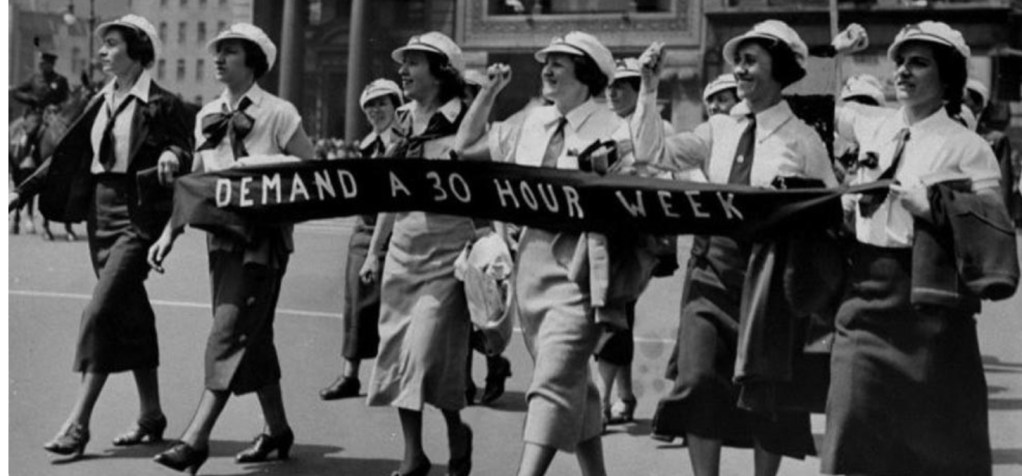
The origin of modern trade unions dates back to the Industrial Revolution, the time when technological development in countries such as England, France, and areas of today’s Germany led to the rise of the bourgeoisie (the capitalists) through war and mass murder. The unions were created inside the first factories as a response to the long working hours (up to 18 hours and even more), being forced to live confined in unhealthy, small spaces for workers’ families in the new cities, the starvation wages, and the exploitation of children among many other capitalist attacks.

The bourgeoisie took power by brute force. They imposed a new way of life in the factories that lasts to this day—of obedience and authority. The capitalists control the means of production and force us to work to produce profits for them in order to buy our daily food in a cycle that repeats itself every day until our death. It’s a new form of slavery.

The repetitive and daily labor tasks have condemned human beings to live most of their lives as machines. From the beginning of the new system, the bosses banned unions under very severe penalties because they fear any organization and struggle of the working class.

In summary, trade unions appeared at the end of the 18th century as a result of the development of the capitalist mode of production and the contradiction between the new social classes: bourgeois and proletarians.

A key point in the history of trade unions is that, since the consolidation of the capitalist system, trade unions were created not to transform the existing system but to fight for, within the limits of capitalism, the “improvement of working conditions,” i.e., reforms.

The activity of the unions recognizes and legitimizes the class division. It accepts negotiating with the exploiter (the boss). Instead, the masses need to fight to transform society to meet our needs.

[RETURN TO ENTRIES]

Comunismo y Sindicatos
Breve Reseña Histórica

Antes de la existencia de la sociedad de clases, los seres humanos vivieron durante 80 000 años en una sociedad sin clases. La producción de alimentos, la construcción de casas y la organización de las familias eran colectivas, para el bienestar común de todos, para satisfacer las necesidades humanas. No había explotadores. Esto fue el comunismo preclasista.

Más tarde, cuando la humanidad comenzó a producir excedentes, esto cambió en un proceso histórico de lucha de clases hacia la esclavitud, ya que los más codiciosos tomaron la producción de la colectividad como propia. Más tarde, bajo el linaje de los reyes, la nueva clase dominante tomó la cima de la pirámide social durante todo el período histórico conocido como feudalismo. En este período, la producción primaria era la agricultura. A medida que el feudalismo se desarrolló aún más, surgió el taller medieval.

Desde la época medieval, los siervos que trabajaban la tierra fueron expulsados de ella. Tuvieron que trasladarse a las ciudades para encontrar trabajo en los talleres. Los trabajadores y aprendices (trabajadores no remunerados) se vieron obligados a ser contratados por los «amos y sus sociedades de amos» o a enfrentarse a un castigo por «vagancia» (no trabajar).

Fueron los artesanos ricos, los comerciantes y los propietarios de los primeros bancos quienes crearon los primeros talleres que más tarde se convirtieron en fábricas. Los siervos o campesinos arruinados económicamente y los artesanos se vieron obligados a contratar a sus explotadores para sobrevivir. Debido a que se necesitaban grandes fortunas para establecer una fábrica, los capitalistas crearon un sistema que les convenía y se colocaron en la cima, condenando al 99 % de la población mundial a la esclavitud asalariada que continúa hasta hoy.

En el pasado, los sindicatos se definían como la asociación formada por personas que realizan el mismo trabajo, para promover y defender sus intereses morales y económicos.

El origen de los sindicatos modernos se remonta a la Revolución Industrial, época en la que el desarrollo tecnológico en países como Inglaterra, Francia y zonas de la actual Alemania condujo al auge de la burguesía (los capitalistas) a través de la guerra y el asesinato en masa. Los sindicatos se crearon en las primeras fábricas como respuesta a las largas jornadas laborales (de hasta 18 horas e incluso más), a la obligación de vivir confinados en espacios pequeños e insalubres para las familias de los trabajadores en las nuevas ciudades, a los salarios de miseria y a la explotación de los niños, entre muchos otros ataques capitalistas.

La burguesía tomó el poder por la fuerza bruta. Impusieron una nueva forma de vida en las fábricas que perdura hasta nuestros días: de obediencia y autoridad. Los capitalistas controlan los medios de producción y nos obligan a trabajar para producirles beneficios con el fin de comprar nuestra comida diaria en un ciclo que se repite cada día hasta nuestra muerte. Es una nueva forma de esclavitud.

Las tareas laborales repetitivas y diarias han condenado a los seres humanos a vivir la mayor parte de sus vidas como máquinas. Desde el comienzo del nuevo sistema, los jefes prohibieron los sindicatos bajo penas muy severas porque temen cualquier organización y lucha de la clase trabajadora.

En resumen, los sindicatos aparecieron a finales del siglo XVIII como resultado del desarrollo del modo de producción capitalista y la contradicción entre las nuevas clases sociales: burgueses y proletarios.

Un punto clave en la historia de los sindicatos es que, desde la consolidación del sistema capitalista, los sindicatos se crearon no para transformar el sistema existente, sino para luchar, dentro de los límites del capitalismo, por la «mejora de las condiciones de trabajo», es decir, por reformas.

La actividad de los sindicatos reconoce y legitima la división de clases. Acepta negociar con el explotador (el jefe). En cambio, las masas deben luchar para transformar la sociedad y satisfacer nuestras necesidades.

[VOLVER A LAS ENTRADAS]

Unions / Syndicatos

Communism, not Unions, Will Liberate Us from Wage Slavery

Unions emerged not as revolutionary organizations to overthrow capitalism. {see link}.Unfortunately since workers didn’t yet have a dialectical materialist understanding of capitalism, they limited their struggle to reforming capitalism, trying to improve wages, working conditions and other benefits but still keeping wage slavery.

Fighting only for temporary improvements favors the continued exploitation of the workers in maquilas, mines, construction, hospitals, and everywhere. It helps increase the quantity and pace of work. Today, everything is more expensive. We have to work more. Our wages are not enough to cover our basic needs. These are chains that we communists need to break.

Another error of the old communist movement was to believe in first winning power through either elections or revolutions that leave the bourgeois state intact, in order to then fight for socialism and, sometime in the future, communism.

We could make a very long list of the betrayals that the union leaders have committed: How they have divided the workers, creating up to 5 or 7 unions in the same factory; how they protect only the members of their own union and leave out the other workers in the same factory in the face of the bosses’ attacks. How the union leaders in the United States now travel in private jets and get luxuries for negotiating and betraying the workers in the factory, among other betrayals. 

By reviewing history, we realize that the unions, both in the past and today, are not the way to liberate ourselves from capitalist wage slavery because, in essence, they accept it.

The list could go on. The International Communist Workers’ Party calls not to fight for crumbs or leftovers as the current union leaders do and will always do. Instead, we call for fighting directly to win all men and women workers in all the factories in the world to fight to eliminate wage slavery with communist revolution. 

So that the workers who produce all the food, clothing, cars, housing, etc., become the real owners of the factories and all society. So collectively we determine what, how much, and how to produce. So that all workers can balance life in the factory with life with their family.

Comrades, friends, co-workers, workers of the world, ICWP does not attack or condemn those workers who are members of a union and who from there are fighting against the bosses’ abuse and mistreatment, day by day for a dignified life. However, we are warning you that the union struggle leads to a dead end. It perpetuates the capitalist horrors. 

Therefore, we invite you to join the International Communist Workers’ Party and fight for political strikes that will definitively transform your life, to fight to win power and to be the ones who define the course of your life and that of your families. Where each person receives according to his or her needs and each works according to his or her commitment and ability. That is real communism.

We need to wage a struggle that does not involve crumbs (reforms), which can be taken away, destroyed, and trampled on by the bosses who are also friends and allies of the union leaders. They negotiate with them and buy them with large sums of money. The bosses also control the so-called “democratic governments.” We must fight to change forever the course of our lives.

The road forward is the active and direct struggle for communism. A society without bosses, profits, or money, where we collectively meet the needs of our class. Join collectives of the International Workers’ Party and build our worker-peasant-soldier army and take power. Let’s start reading and distributing Red Flag newspaper.

Communism or Barbarism!

[RETURN TO ENTRIES]

[TRADUCCIÓN PROVISIONAL]

El comunismo, no los sindicatos, nos liberará de la esclavitud salarial

Los sindicatos no surgieron como organizaciones revolucionarias para derrocar el capitalismo. {ver enlace}. Desafortunadamente, como los trabajadores aún no tenían una comprensión materialista dialéctica del capitalismo, limitaron su lucha a reformar el capitalismo, tratando de mejorar los salarios, las condiciones de trabajo y otros beneficios, pero manteniendo la esclavitud salarial.

Luchar solo por mejoras temporales favorece la continua explotación de los trabajadores en las maquilas, las minas, la construcción, los hospitales y en todas partes. Ayuda a aumentar la cantidad y el ritmo de trabajo. Hoy en día, todo es más caro. Tenemos que trabajar más. Nuestros salarios no son suficientes para cubrir nuestras necesidades básicas. Estas son cadenas que los comunistas debemos romper.

Otro error del viejo movimiento comunista fue creer en ganar primero el poder a través de elecciones o revoluciones que dejaran intacto el estado burgués, para luego luchar por el socialismo y, en algún momento en el futuro, por el comunismo.

Podríamos hacer una lista muy larga de las traiciones que han cometido los líderes sindicales: cómo han dividido a los trabajadores, creando hasta 5 o 7 sindicatos en la misma fábrica; cómo protegen solo a los miembros de su propio sindicato y dejan de lado a los demás trabajadores de la misma fábrica ante los ataques de los jefes. Cómo los líderes sindicales en Estados Unidos ahora viajan en jets privados y obtienen lujos por negociar y traicionar a los trabajadores en la fábrica, entre otras traiciones.

Al revisar la historia, nos damos cuenta de que los sindicatos, tanto en el pasado como en la actualidad, no son la forma de liberarnos de la esclavitud salarial capitalista porque, en esencia, la aceptan.

La lista podría continuar. El Partido Comunista Obrero Internacional llama a no luchar por migajas o sobras como hacen y harán siempre los actuales líderes sindicales. En su lugar, llamamos a luchar directamente para ganar a todos los trabajadores y trabajadoras de todas las fábricas del mundo a luchar para eliminar la esclavitud asalariada con la revolución comunista.

Para que los trabajadores que producen todos los alimentos, ropa, automóviles, viviendas, etc., se conviertan en los verdaderos dueños de las fábricas y de toda la sociedad. Para que colectivamente determinemos qué, cuánto y cómo producir. Para que todos los trabajadores puedan equilibrar la vida en la fábrica con la vida con su familia.

Camaradas, amigos, compañeros de trabajo, trabajadores del mundo, el PCOI no ataca ni condena a aquellos trabajadores que son miembros de un sindicato y que desde allí luchan contra el abuso y el maltrato de los patrones, día a día por una vida digna. Sin embargo, les advertimos que la lucha sindical conduce a un callejón sin salida. Perpetúa los horrores capitalistas.

Por lo tanto, los invitamos a unirse al Partido Comunista Obrero Internacional y luchar por huelgas políticas que transformarán definitivamente su vida, luchar para ganar el poder y ser quienes definan el rumbo de su vida y la de sus familias. Donde cada persona reciba según sus necesidades y cada uno trabaje según su compromiso y capacidad. Eso es el comunismo real.

Necesitamos librar una lucha que no implique migajas (reformas), que pueden ser arrebatadas, destruidas y pisoteadas por los jefes que también son amigos y aliados de los líderes sindicales. Ellos negocian con ellos y los compran con grandes sumas de dinero. Los jefes también controlan los llamados «gobiernos democráticos». Debemos luchar para cambiar para siempre el curso de nuestras vidas.

El camino a seguir es la lucha activa y directa por el comunismo. Una sociedad sin patrones, ganancias o dinero, donde satisfagamos colectivamente las necesidades de nuestra clase. Únete a los colectivos del Partido Obrero Internacional y construyamos nuestro ejército de trabajadores, campesinos y soldados y tomemos el poder. Empecemos a leer y distribuir el periódico Bandera Roja.

¡Comunismo o barbarie!

[VOLVER A LAS ENTRADAS]

Reformism / Reformismo

[ESPAÑOL ABAJO]

Reformism is the belief that capitalism can be improved. Reformists want better wages, safer jobs, universal healthcare, affordable housing, and legal protections for oppressed groups. They want the system to be fairer, not abolished.

For over a century, many on the left believed this was a first step toward revolution. Even communists used to argue that leading militant reform struggles—like strikes for higher pay or campaigns for stronger unions—would expose the limits of capitalism and lead workers to demand more. The theory was that fighting for reforms would radicalize people, teaching them to trust their own power and take the next step toward communism.

But that theory didn’t work.

Instead of preparing the ground for revolution, it grew new reformists. Workers won some reforms—and often, they were grateful to the unions or politicians who delivered them. They got just enough to believe in the system, not break from it. When those reforms were later reversed or crushed—as they always are under capitalism—many were disillusioned and dropped out of struggle entirely. Rather than becoming communists, they became disappointed reformers.

Capitalism can’t be reformed. Its engine is profit. To keep profits flowing, bosses must exploit labor, fuel racism and sexism, control the state, and make war. Any reform that cuts into profit is attacked. Gains are rolled back by courts, legislation, police, or economic crisis. Wage increases can’t keep up with inflation.

And yet reformism is seductive. It promises quick results. It urges us to be “practical.” It tells us to vote for the lesser evil, pass one more law, elect one more progressive. But this only drains energy from revolution. Reformism teaches people to appeal to power, not to seize it.

Some reformists say we must pass through “stages”—first winning democracy or independence, then later fighting for socialism. History shows this doesn’t work either. Nationalist leaders always strike deals with imperialists and suppress workers’ movements. The local elite replaces the foreign one, and capitalism continues.

Even the “socialist” stage once imagined by communists has proven to be a dead end. The old idea of socialism as a transitional phase—with state-run industries, wages, and money—turned out to be state capitalism. The bosses were replaced by bureaucrats, who themselves became bosses, and exploitation remained.

Today, communists reject reformism and the two-stage theory. We reject the idea of socialism as a halfway house. We fight directly for communism—a society without money, wages, private property, borders, or the state. We don’t wait for a perfect moment osr a gradual shift. We organize now for the revolutionary overthrow of capitalism.

That doesn’t mean we ignore workers’ struggles. On the contrary, we participate in them—but not to win temporary reforms. We take part them to build relationships, to spread communist ideas, and to fight for a new kind of power.  We see reform struggles as an opportunity to win angry workers in struggle to see that communism will end their wage slavery, to show that workers can run society and produce collectively to meet our needs instead of their profits.

Reformism is not a stepping stone. It’s a trap. Communists don’t want a nicer version of capitalism; there is none. We want to destroy it. That’s the message we bring to every strike, every protest, every school and workplace. Not hope in elections or reforms, but confidence in the power of the working class to transform the world.

[RETURN TO ENTRIES]

[TRADUCCIÓN PROVISIONAL]

El reformismo es la creencia de que el capitalismo puede mejorarse. Los reformistas quieren mejores salarios, empleos más seguros, sanidad universal, viviendas asequibles y protección legal para los grupos oprimidos. Quieren que el sistema sea más justo, no que se abol

Durante más de un siglo, muchos en la izquierda creyeron que este era un primer paso hacia la revolución. Incluso los comunistas solían argumentar que liderar luchas reformistas militantes, como huelgas por salarios más altos o campañas por sindicatos más fuertes, expondría los límites del capitalismo y llevaría a los trabajadores a exigir más. La teoría era que luchar por las reformas radicalizaría a la gente, enseñándoles a confiar en su propio poder y a dar el siguiente paso hacia el comunismo.

Pero esa teoría no funcionó.

En lugar de preparar el terreno para la revolución, hizo crecer a nuevos reformistas. Los trabajadores consiguieron algunas reformas y, a menudo, se mostraron agradecidos a los sindicatos o a los políticos que las lograron. Obtuvieron lo justo para creer en el sistema, no para romper con él. Cuando esas reformas fueron posteriormente revocadas o aplastadas, como siempre ocurre bajo el capitalismo, muchos se desilusionaron y abandonaron por completo la lucha. En lugar de convertirse en comunistas, se convirtieron en reformistas decepcionados.

El capitalismo no se puede reformar. Su motor es el beneficio. Para que los beneficios sigan fluyendo, los jefes deben explotar la mano de obra, alimentar el racismo y el sexismo, controlar el Estado y hacer la guerra. Cualquier reforma que reduzca los beneficios es atacada. Las conquistas se revierten mediante los tribunales, la legislación, la policía o la crisis económica. Los aumentos salariales no pueden seguir el ritmo de la inflación.

Y, sin embargo, el reformismo es seductor. Promete resultados rápidos. Nos insta a ser «prácticos». Nos dice que votemos por el mal menor, que aprobemos una ley más, que elijamos a un progresista más. Pero esto solo agota la energía de la revolución. El reformismo enseña a la gente a apelar al poder, no a tomarlo.
Algunos reformistas dicen que debemos pasar por «etapas»: primero conquistar la democracia o la independencia y luego luchar por el socialismo. La historia demuestra que esto tampoco funciona. Los líderes nacionalistas siempre llegan a acuerdos con los imperialistas y reprimen los movimientos obreros. La élite local sustituye a la extranjera y el capitalismo continúa.

Incluso la etapa «socialista» que imaginaron en su día los comunistas ha demostrado ser un callejón sin salida. La vieja idea del socialismo como fase de transición —con industrias, salarios y dinero estatales— resultó ser capitalismo de Estado. Los jefes fueron sustituidos por burócratas, que se convirtieron ellos mismos en jefes, y la explotación se mantuvo.

Hoy, los comunistas rechazamos el reformismo y la teoría de las dos etapas. Rechazamos la idea del socialismo como una solución a medias. Luchamos directamente por el comunismo, una sociedad sin dinero, salarios, propiedad privada, fronteras ni Estado. No esperamos un momento perfecto ni un cambio gradual. Nos organizamos ahora para el derrocamiento revolucionario del capitalismo.

Eso no significa que ignoremos las luchas de los trabajadores. Al contrario, participamos en ellas, pero no para conseguir reformas temporales. Participamos en ellas para construir relaciones, difundir las ideas comunistas y luchar por un nuevo tipo de poder. Consideramos las luchas reformistas como una oportunidad para ganar a los trabajadores enfadados en la lucha, para que vean que el comunismo acabará con su esclavitud salarial, para demostrar que los trabajadores pueden dirigir la sociedad y producir colectivamente para satisfacer nuestras necesidades en lugar de sus beneficios.

El reformismo no es un peldaño. Es una trampa. Los comunistas no queremos una versión más amable del capitalismo; no existe. Queremos destruirlo.

Ese es el mensaje que llevamos a cada huelga, a cada protesta, a cada escuela y lugar de trabajo. No esperanza en las elecciones o en las reformas, sino confianza en el poder de la clase obrera para transformar el mundo.

[VOLVER A LAS ENTRADAS]

Artificial Intelligence / Inteligencia Artificial

Recently a Chinese computer program shook the foundations of US capitalism. The stock market plummeted and Nvidia (the chipmaker) alone lost more than half a trillion dollars.

The program was DeepSeek R1. It rivals the best ChatGPT applications, but that was not what shook the foundations. What’s special about DeepSeek is its cost. It took $6 million to develop and train, whereas its rivals each required about $100 million.

Before DeepSeek everyone thought that AI required a huge investment in training, plus lots of expensive Nvidia chips. Its rivals now can’t compete, and China arguably is ahead in the AI race.

What is known as GOFAI – Good Old Fashioned AI – was hopeless because it relied on formal logic, operating on facts and rules – relatively small sets (100s). This technology dates to the 1960s.

All this changed with the switch to neural networks about 10 years ago. The translations are exceptional, a computer is the world Go champion, and the articles are astounding. 

There are lots of writers who disparage AI, but pay no attention. It really works. The author asked ChatGPT, for example, to write a syllabus for an introductory course on logic. The result was flawless. 

Stable Diffusion, given the right prompts, can produce beautiful images.

For those of us used to the limitations of GOFAI, the new AI is truly mind boggling.

In fact neural networks have been around since the 1960s but for many decades the results were unimpressive. It wasn’t till massive computer power was applied, involving large numbers of Nvidia chips, that the corner was turned. A perfect example of a quantitative change leading to a qualitative change.

Many people welcome the new AI as a labor saving innovation that will make workers’ lives easier. 

What they are forgetting is capitalism. Under capitalism there is technological progress but no social progress. Short of a revolution it’s capitalism today, tomorrow, and the day after.

When tractors were introduced on farms many thought they would relieve the poor overworked farmers from the backbreaking labor of farming without mechanical assistance. Instead tractors became the norm, and without a tractor you couldn’t compete (“compete” being the key word). The result was a smaller number of more productive farmers spending long hours in the tractor seat.

It’s hard to say how much AI will affect workers. In general, new technology can put large numbers out of work, who then face unemployment and poverty. But workers then rebel against this suffering, so the technology has the effect of sharpening the class struggle.

Most likely graphic designers and copywriters will be the first to feel the tractor effect. Ironically, white collar workers thought they were immune to automation. On the contrary, blue collar workers, like carpenters, are relatively safe.

Under communism, of course, there is no competition and new technology will make workers’ lives easier. People will still develop new technology but they will not be motivated by financial gain. Instead they will aim to improve the conditions of their fellow workers.

So DeepSeek will not improve ordinary workers’ lives but it is bad news for the US AI industry. They will have to rethink their current reliance on large numbers of powerful Nvidia chips.

Under capitalism technological progress benefits no one in the long run, not even the bosses. In the worst case it contributes to overproduction and the resulting trade wars and even shooting wars.

If we want to improve workers’ lives we need, not new technology, but a new society – communism. This requires a revolution, which in turn requires a party – the ICWP. The communist party is the ‘technology’ that makes communism possible. Please join us.

[RETURN TO ENTRIES]

[TRADUCCIÓN PROVISIONAL]

Recientemente, un programa informático chino sacudió los cimientos del capitalismo estadounidense. El mercado de valores se desplomó y solo Nvidia (el fabricante de chips) perdió más de medio billón de dólares.
El programa era DeepSeek R1. Rivaliza con las mejores aplicaciones de ChatGPT, pero eso no fue lo que sacudió los cimientos. Lo que tiene de especial DeepSeek es su coste. Se necesitaron 6 millones de dólares para desarrollarlo y entrenarlo, mientras que sus rivales requirieron cada uno unos 100 millones de dólares.
Antes de DeepSeek, todo el mundo pensaba que la IA requería una enorme inversión en formación, además de muchos y caros chips Nvidia. Sus rivales ahora no pueden competir, y China podría decirse que va por delante en la carrera de la IA.
Lo que se conoce como GOFAI (Good Old Fashioned AI, IA a la antigua) era inútil porque se basaba en la lógica formal, operando sobre hechos y reglas, conjuntos relativamente pequeños (cientos). Esta tecnología data de la década de 1960.
Todo esto cambió con el cambio a las redes neuronales hace unos 10 años. Las traducciones son excepcionales, un ordenador es el campeón mundial de Go y los artículos son asombrosos.
Hay muchos escritores que menosprecian la IA, pero no le prestan atención. Realmente funciona. El autor pidió a ChatGPT, por ejemplo, que escribiera un programa de estudios para un curso introductorio de lógica. El resultado fue impecable.
La difusión estable, con las indicaciones adecuadas, puede producir imágenes hermosas.
Para aquellos de nosotros acostumbrados a las limitaciones de la IA, la nueva IA es realmente alucinante.
De hecho, las redes neuronales existen desde la década de 1960, pero durante muchas décadas los resultados no fueron impresionantes. No fue hasta que se aplicó una enorme potencia informática, con un gran número de chips Nvidia, que se dio un giro. Un ejemplo perfecto de un cambio cuantitativo que conduce a un cambio cualitativo.
Mucha gente acoge con satisfacción la nueva IA como una innovación que ahorra trabajo y facilitará la vida de los trabajadores.
Lo que se olvidan es el capitalismo. Bajo el capitalismo hay progreso tecnológico, pero no progreso social. A falta de una revolución, el capitalismo es hoy, mañana y pasado mañana.
Cuando se introdujeron los tractores en las granjas, muchos pensaron que aliviarían a los agricultores pobres con exceso de trabajo de la agotadora labor de cultivar sin ayuda mecánica. En cambio, los tractores se convirtieron en la norma, y sin un tractor no se podía competir («competir» es la palabra clave). El resultado fue un número menor de agricultores más productivos que pasaban largas horas en el asiento del tractor.
Es difícil decir cuánto afectará la IA a los trabajadores. En general, la nueva tecnología puede dejar sin trabajo a un gran número de personas, que se enfrentan entonces al desempleo y la pobreza. Pero los trabajadores se rebelan entonces contra este sufrimiento, por lo que la tecnología tiene el efecto de agudizar la lucha de clases.
Lo más probable es que los diseñadores gráficos y redactores publicitarios sean los primeros en sentir el efecto tractor. Irónicamente, los trabajadores de oficina pensaban que eran inmunes a la automatización. Por el contrario, los trabajadores manuales, como los carpinteros, están relativamente a salvo.
En el comunismo, por supuesto, no hay competencia y las nuevas tecnologías facilitarán la vida de los trabajadores. La gente seguirá desarrollando nuevas tecnologías, pero no estará motivada por el beneficio económico. En su lugar, tratará de mejorar las condiciones de sus compañeros de trabajo.
Así que DeepSeek no mejorará la vida de los trabajadores ordinarios, pero es una mala noticia para la industria de la IA de EE. UU. Tendrán que replantearse su actual dependencia de un gran número de potentes chips Nvidia.
Bajo el capitalismo, el progreso tecnológico no beneficia a nadie a largo plazo, ni siquiera a los jefes. En el peor de los casos, contribuye a la sobreproducción y a las consiguientes guerras comerciales e incluso a las guerras armadas.
Si queremos mejorar la vida de los trabajadores, no necesitamos nueva tecnología, sino una nueva sociedad: el comunismo. Esto requiere una revolución, que a su vez requiere un partido: el PCOI. El partido comunista es la «tecnología» que hace posible el comunismo. Por favor, únete a nosotros.

[VOLVER A LAS ENTRADAS]